
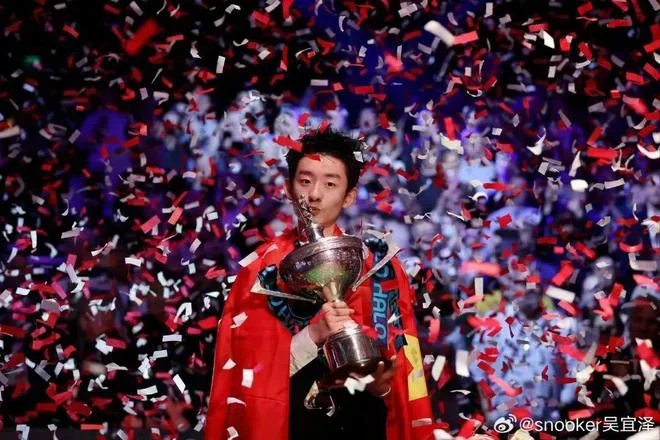
In the early hours of May 5, Beijing time, a historic moment unfolded at the Crucible Theatre in Sheffield, England. Wu Yize, a 22-year-old Chinese snooker player, defeated veteran Shaun Murphy 18-17 in a thrilling World Snooker Championship final, showcasing nerves of steel and exceptional skill.
Wu Yize not only became the first post-2000s world champion in snooker history but also, at 22 years and 203 days old, became the second-youngest champion ever at the Crucible. His victory secured a second consecutive world title for Chinese snooker, once again shining a spotlight on China at the global level.
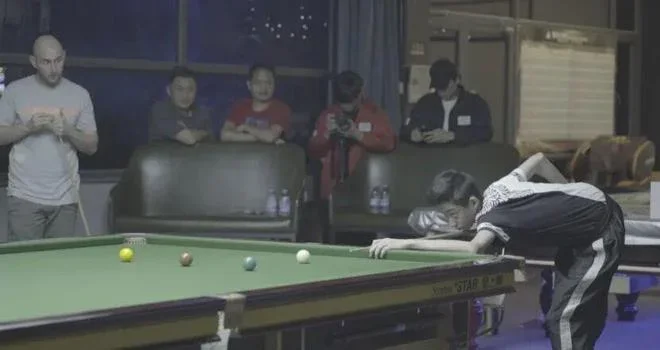
What many may not know is that the seeds of this triumph were planted in Dongguan, Guangdong Province. At age 13, Wu Yize was already a top junior player in China but faced limitations in his hometown of Lanzhou due to scarce professional training resources. To pursue higher goals, his father made the bold decision to sell their family home and relocate to Changping, Dongguan, where Wu Yize joined a local professional snooker club for intensive, specialized training.
It was in Dongguan that Wu Yize’s talent fully blossomed. Day after day of rigorous practice helped him address technical weaknesses and develop a mature competitive mindset, laying an unshakable foundation for his world championship success. Wu Yize’s story is not an isolated case. Looking back at the rise of Chinese snooker, legends Ding Junhui and Zhao Xintong also share deep ties with this city.
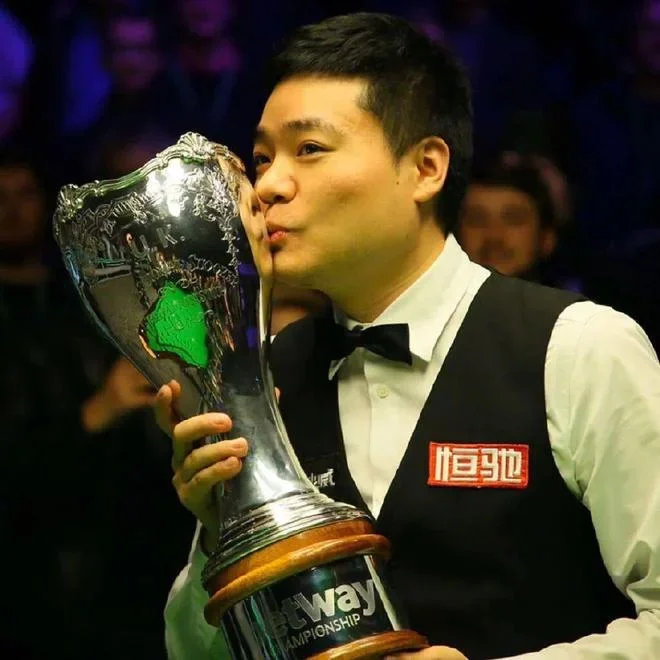
Dongguan’s snooker legacy began with Ding Junhui. In late 1998, at just 11 years old, Ding moved with his family from Yixing, Jiangsu, to Dongguan to join the Dongying Club and start his professional career. Over eight years in Dongguan, he immersed himself in training, surrounded by a professional environment and intense competitive atmosphere. From a young dreamer, he grew into the leader of Chinese snooker. In 2005, at 18, Ding won the China Open as a wildcard, breaking the long dominance of European and American players in snooker. This victory opened a new chapter for the sport in China and brought Dongguan into the national spotlight as a “snooker hotbed.”
Zhao Xintong’s path further demonstrates Dongguan’s strength in player development. As a teenager, Zhao traveled to Dongguan to study under experienced coach Lin Kehong, refining his fundamentals. His outstanding performance at Dongying Club earned him a recommendation to the CBSA World Snooker Academy in Beijing. He frequently returned to the Dongguan branch of the academy for closed training, using advanced data analysis systems to tailor his improvement plan, practicing over eight hours daily to sharpen his long potting and cue ball control. After failing to gain professional status in 2015, Zhao returned to Dongguan to regroup, conducting a comprehensive review of his technique and mental state. This period was crucial for his successful entry into the professional circuit the following year.
From Ding Junhui to Zhao Xintong and now Wu Yize, generations of world snooker champions emerging from Dongguan is no coincidence. It is the inevitable result of decades of dedicated investment in sports and a professional development system. This city, already famous for its basketball culture, has firmly established itself as China’s cradle of snooker talent.
Why has Dongguan consistently produced snooker champions? It’s not just about a few gifted players; it’s about the deep-rooted soil, the comprehensive system, the continuity of tradition, and a complete talent pipeline.
The city welcomes dreamers from all over, with no barriers or restrictions. It has developed a mature coaching team, a strong competitive atmosphere, and scientific training principles. The environment can tailor training to individual talents, tolerate mistakes during growth, and provide support during career slumps. Over decades, Dongguan has transformed individual struggles into a city-wide norm for sports development, upgrading from relying on occasional talent to systematically and sustainably producing champions.
More notably, Dongguan has moved beyond relying solely on private clubs. It actively engages in top-level planning and industry ecosystem building, covering the entire chain from youth development and professional training to talent certification and hosting top-tier events.
In 2022, the Guangdong branch of the CBSA World Snooker Academy was established in Changping, Dongguan, becoming the center for high-level snooker training in South China. In just three years, it has attracted trainees from across the country and even abroad, while systematically training professional coaches and referees, contributing hundreds of certified professionals to the sport and strengthening the industry’s standardization.
Strong sports foundations rely on stable grassroots development, and long-term success depends on youth programs. In 2020, China’s first prefecture-level youth snooker association was established in Dongguan. It actively promotes snooker in schools, creating pathways for children’s initiation, talent selection, and centralized training. This fully connects school programs, reserve teams, professional training, and career pathways, ensuring a steady stream of future talent.
Infrastructure and event IP have also advanced. High-standard professional snooker venues in Changping have filled gaps in top-level training and competition facilities. In 2024, the World Women’s Snooker Championship was permanently hosted in Dongguan, bringing a world-class event to the city. This creates a virtuous cycle: training facilities, mentoring, competition platforms, and career opportunities all in one place.
From early grassroots efforts to a mature youth system, the arrival of professional academies, talent cultivation, and permanent major events, Dongguan has built an irreplicable snooker ecosystem.
One city. One group of people. One sport. Decades of perseverance.
Wu Yize’s championship is a triumph of individual talent and hard work, and also the strongest proof of Dongguan’s role as a sports cradle. In the future, this fertile ground will continue to nurture new stars, ensuring that the flame of Chinese snooker burns brightly and reaches the world.