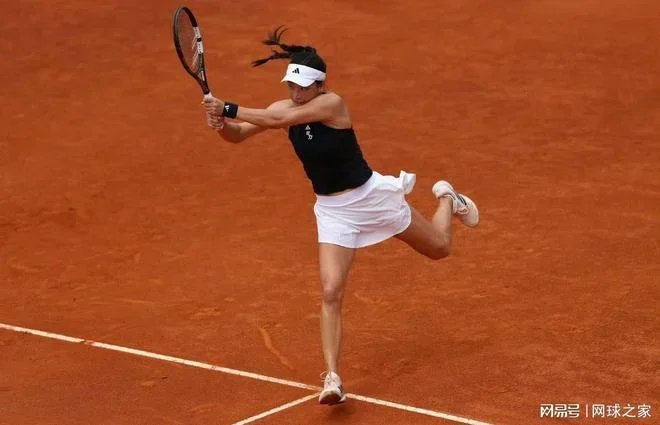
Wang Xinyu exited the Rome Masters in the first round after a tough loss to Iga Swiatek, but it was the manner of her defeat that stung most. She took a 3-0 lead in the first set and 3-2 in the second, breaking serve early in both, only to surrender each advantage. It marked her fourth consecutive first-round exit at a WTA 1000 event.
Sound familiar? It should. Just the day before, Zheng Qinwen followed a similar script: a blazing start, then a flood of unforced errors. So what’s really going on when a player squanders a lead? And what can be done about it?
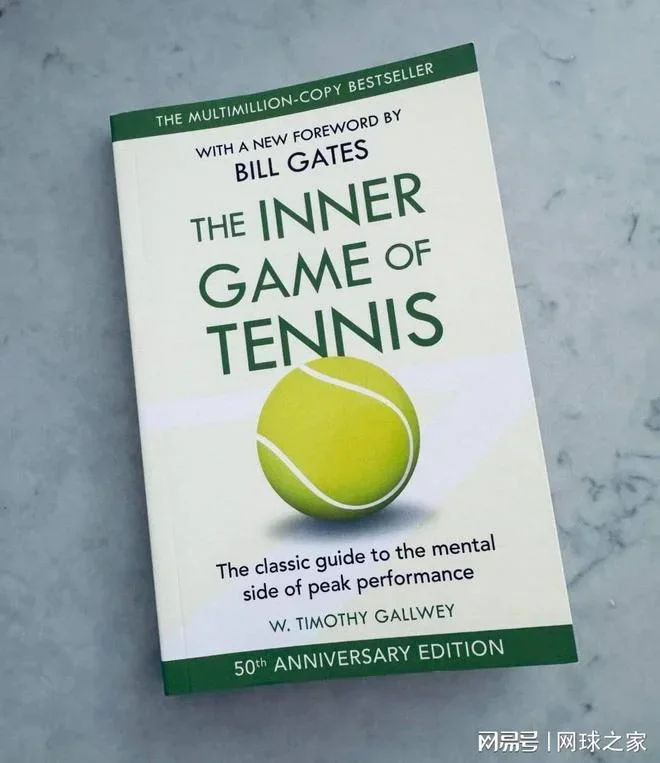
To understand Wang Xinyu’s struggles, we have to start with something she said before the tournament.
**The Battle of Two Selves: Lessons from *The Inner Game of Tennis***
During the pre-tournament media day in Rome, Wang Xinyu mentioned a book she was reading: *The Inner Game of Tennis*. This classic work on tennis psychology introduced a powerful theory: every person has two selves. Self 1 is the critic, the one that sets standards and judges every shot. Self 2 is the doer, the one that actually executes. When those two collide, the internal conflict can derail a match.
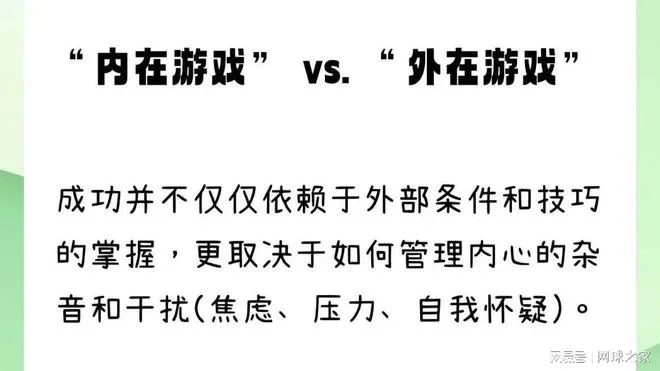
The book describes Self 1 as the voice that says, “You should have hit that differently,” or “Why did you miss that easy shot?” Self 2, meanwhile, just plays. When the opponent starts muttering, smashing rackets, or venting at their coach, that’s a sign their Self 1 has taken over. Why? Because they can’t meet the perfect model their mind demands.
Wang Xinyu admitted after the Australian Open, “I’ve been holding myself to that standard in every match since. But I just can’t do it.”
**The Trap of Perfectionism**
When Wang Xinyu was playing freely, everything flowed. But as soon as a few errors crept in, her internal critic kicked in: “I can hit this shot in practice—why not now?” That doubt led to hesitation. Instead of focusing on the ball, she focused on past mistakes.
Sound like anyone else? Iga Swiatek fell into the exact same trap. After winning the first set 6-1 and leading 5-3 in the second with a chance to serve out the match, she kept trying to hit perfect winners. Her Self 1 demanded the crushing tennis of her 2022 form—every forehand with spin, depth, and angle. The result? Unforced errors piled up, her first-serve percentage dropped, and 5-3 became 5-6.
This is the perfectionist trap: when you insist on playing at your peak level even when you’re not there, you make choices that look good on paper but hurt you on the scoreboard. You’d rather risk an error than play a “ugly” point—a safe, high-percentage shot.
Wang Xinyu’s pattern of collapsing after building a lead is a textbook case. As soon as Self 1 smells a perfect victory, it demands every shot be dominant. The tighter she gets, the more errors come, which fuels more criticism. A vicious cycle.
**The Power of Ugly Winning**
Here’s the counterintuitive solution: embrace “ugly winning.”
Ugly winning means letting go of perfection. An ace is perfect. A clean winner is perfect. But when you strip those away, what remains? Many would say tennis loses its soul. But there’s another side: it becomes gritty, forgiving, and adaptable. Tennis isn’t an art form—it’s a sport about who makes fewer mistakes.
Three keys to ugly winning:
First, **restraint**. Suppress the urge to hit aces or winners on every point. Replace “perfect shot” with “effective shot.” If your forehand is misfiring, slice. If your backhand is off, drop shot. If your first serve is failing, hit a safe second serve with spin. That’s not weakness—it’s clarity.
Second, **decision-making**. Know when to take risks and when to play safe. When it’s 30-40 and you’re facing a break point, your only goal should be to get the ball in play and make your opponent hit one more shot. Don’t try to save the break point with an ace. But at 0-0 or 15-0, you can experiment. That’s being awake on court.
Third, **abandon rigid tactics**. Pre-match plans are useful, but they shouldn’t become chains. If you planned to attack your opponent’s backhand but find their backhand is rock solid and forehand is shaky, adjust immediately. The best tactics evolve during a match. They may look messy, but they earn points.
**Embracing Imperfection**
Swiatek survived—barely—because she eventually accepted that she wasn’t at her best. After losing the second set, she reset in the decider. Her Self 1 shut up, Self 2 took over, and she found a way.
Wang Xinyu didn’t have that luxury. She had only two sets to figure it out, and by the time she recognized the problem, her match was over. But the lesson is the same: chasing a level that doesn’t exist in the present moment is a losing strategy.
As *The Inner Game of Tennis* says, “When Self 1 stops judging, Self 2 shows abilities you never imagined.” In plain English: silence the chatter in your head, and trust your body.
The answer isn’t to try harder to be perfect. It’s to take a step back—accept your imperfect self, allow yourself to win ugly, and watch what happens.
Tennis has many faces. When you stop chasing perfection, you might just find it.